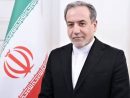
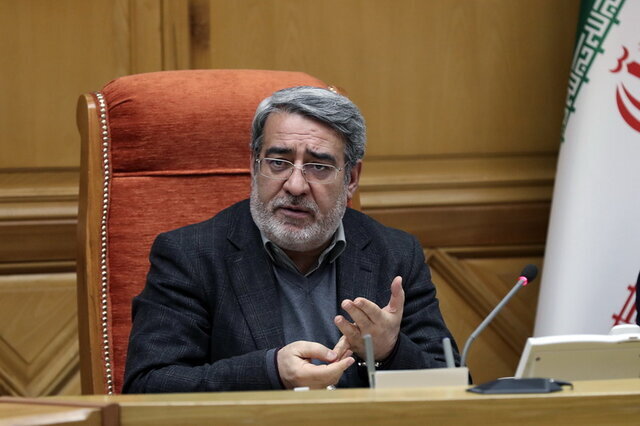
The Ambassador of the Islamic Republic of Iran to China stated that Beijing’s traditional approach will remain based on avoiding direct conflict and preferring political solutions. He emphasized that China, in principle, does not welcome U.S. tension-raising in international waterways and has always stressed the maintenance of shipping security and regional stability.
ISNA – In an exclusive interview with ISNA, Abdolreza Rahmani Fazli analyzed the positions and approach of the Chinese government toward recent developments in West Asia, particularly following the U.S. president’s visit to Beijing.
The People’s Republic of China, recognized today as one of the top powers and economies in the international system, holds vast economic interests with Iran and the Persian Gulf countries. Any disruption in these relations would pose challenges to the global economic standing of this great power. Following developments arising from the war launched by the United States and the Zionist regime against Iran, China has consistently sought to emphasize dialogue and diplomacy while staying clear of broad conflicts. However, given the implicit support embedded in China’s policies toward Iran, the United States has attempted to exert pressure by sanctioning Chinese oil companies and refineries—an action met with a firm, unprecedentedly robust response from Beijing.
During U.S. President Donald Trump’s visit to Beijing last week, Washington aimed to align China with its goals in the Persian Gulf region. However, the outcome of this visit indicates that Beijing is pursuing a policy of avoiding tension far more than the Americans had anticipated.
Difference Between Chinese Diplomacy and Western Frameworks
Analyzing the Chinese government’s approach to recent developments in West Asia, Ambassador Rahmani Fazli told ISNA: “In evaluating China’s positions, an important point must be considered, which is the difference between Beijing’s diplomatic tradition and prevailing Western frameworks. In its foreign policy, China generally avoids emotional, polarized, and overtly aligned rhetoric. This does not imply indifference; rather, it is part of the country’s strategic culture based on caution, balance, and a long-term outlook on international developments.”
He elaborated: “From this perspective, China’s stance on recent developments should be analyzed at multiple levels. First, China is fundamentally opposed to the resort to force outside the framework of international law and without a consensus within the UN Security Council. Second, Beijing believes that continued instability in West Asia affects not only regional security but also the stability of the global economy, energy, and international trade. Third, China is well aware that rising tensions in the region could lead to intensified geopolitical rivalries globally.”
Regarding Iran-China relations under the influence of recent regional developments over the past few months, the senior diplomat noted: “We must be realistic. Although Iran-China relations are strategic and expanding, their nature differs from traditional military alliances. China does not pursue a policy of direct intervention in conflicts, neither regarding Iran nor concerning its other key partners. Beijing mostly endeavors to play the role of a stabilizing and balancing power.”
Rahmani Fazli added: “From the perspective of the Islamic Republic of Iran, the relationship with China is defined based on mutual respect, shared interests, and independence in decision-making for each country. Iran has never formulated, and will never formulate, its foreign policy based on reliance on a foreign power.
This independent character is an integral part of the identity of the Islamic Republic of Iran’s foreign policy.”
eservation of dignity, independence, and national interests in any diplomatic process.”
https://baranpress.ir/?p=12880